⭐ Introduction: Early Detection Saves Lives — Don’t Delay Your Colon Check
Many people delay colonoscopy due to fear, embarrassment, or lack of awareness. But colon problems worsen silently, and detecting them early can prevent:
✔ Cancer ✔ Bleeding ✔ Chronic inflammation ✔ Surgery ✔ Long-term digestive issues
Colonoscopy is one of the simplest, safest tools to identify these issues early — often before symptoms become severe.
BariOSS Clinic, led by Dr. Christopher S.K., offers advanced, painless, sedation-assisted colonoscopy for accurate diagnosis.
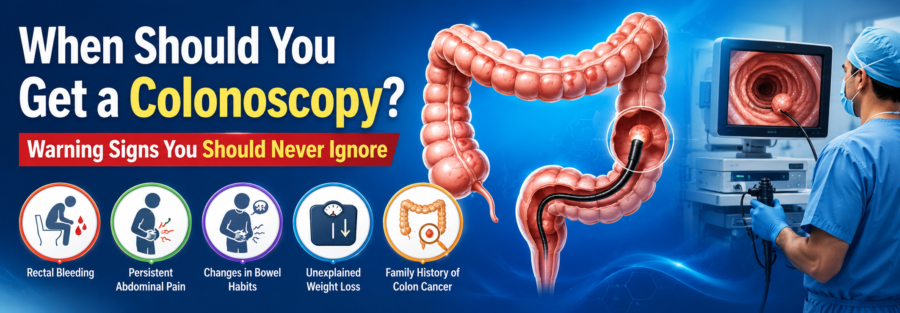
⭐ Signs You Should Never Ignore
You should get a colonoscopy if you have:
⭐ 1. Blood in Stool
The most important red flag. Blood may appear:
✔ Bright red ✔ Dark maroon ✔ Black tarry stools
Causes include polyps, colitis, Crohn’s disease, or cancer.
⭐ 2. Persistent Diarrhea or Loose Stools
If it continues for more than 2 weeks, colon inflammation must be ruled out.
⭐ 3. Chronic Constipation
May indicate bowel obstruction, strictures, or polyps.
⭐ 4. Unexplained Weight Loss
A serious sign of underlying colon damage or malabsorption.
⭐ 5. Abdominal Pain or Cramps
Especially left-sided pain.
⭐ 6. Long-standing Bloating & Gas
Persistent gas may indicate deeper issues than diet alone.
⭐ 7. Mucus in Stool
Seen in infections, IBS, IBD & colitis.
⭐ 8. Changes in Bowel Habits
Sudden onset stools becoming:
✔ Thin ✔ Pencil-like ✔ More frequent ✔ Rare
This may be due to polyps or tumor growth.
⭐ 9. Family History of Colon Cancer
Higher risk → earlier screening needed.
⭐ 10. Age 45+ — Even Without Symptoms
Routine screening is recommended by global medical guidelines.
⭐ Conditions Diagnosed Through Colonoscopy
✔ Polyps (pre-cancer growths) ✔ Colorectal cancer ✔ Ulcerative colitis ✔ Crohn’s disease ✔ Infectious colitis ✔ Diverticular disease ✔ Hemorrhoids ✔ Angiodysplasia ✔ IBS (to rule out other disease)
⭐ Why Colonoscopy Saves Lives
✔ Finds cancer early ✔ Removes polyps instantly ✔ Prevents future surgery ✔ Detects silent diseases ✔ Helps treat bleeding immediately
Early detection = better outcomes.
⭐ What Happens During Colonoscopy?
✔ Sedation given ✔ Scope inserted gently ✔ High-definition camera shows colon lining ✔ Biopsy taken if required ✔ Polyps removed immediately ✔ Minimal discomfort ✔ Procedure takes 20–30 minutes