Introduction: Hernia Is Common — But Often Ignored Until It Becomes Dangerous
A hernia may start as a small bulge, occasional pulling sensation, or mild pain that many people ignore. But medically, a hernia never heals by itself. Instead, it gradually enlarges and can lead to severe, life-threatening complications.
At BariOSS Clinic, Tirunelveli, Dr. ChristopherS.K. provides advanced laparoscopic and robotic hernia repair using state-of-the-art minimally invasive technology for faster recovery, minimal pain, and superior long-term outcomes.
This blog explains the basics every patient must know — what a hernia is, why it occurs, symptoms, and the importance of timely treatment.
What Is a Hernia?
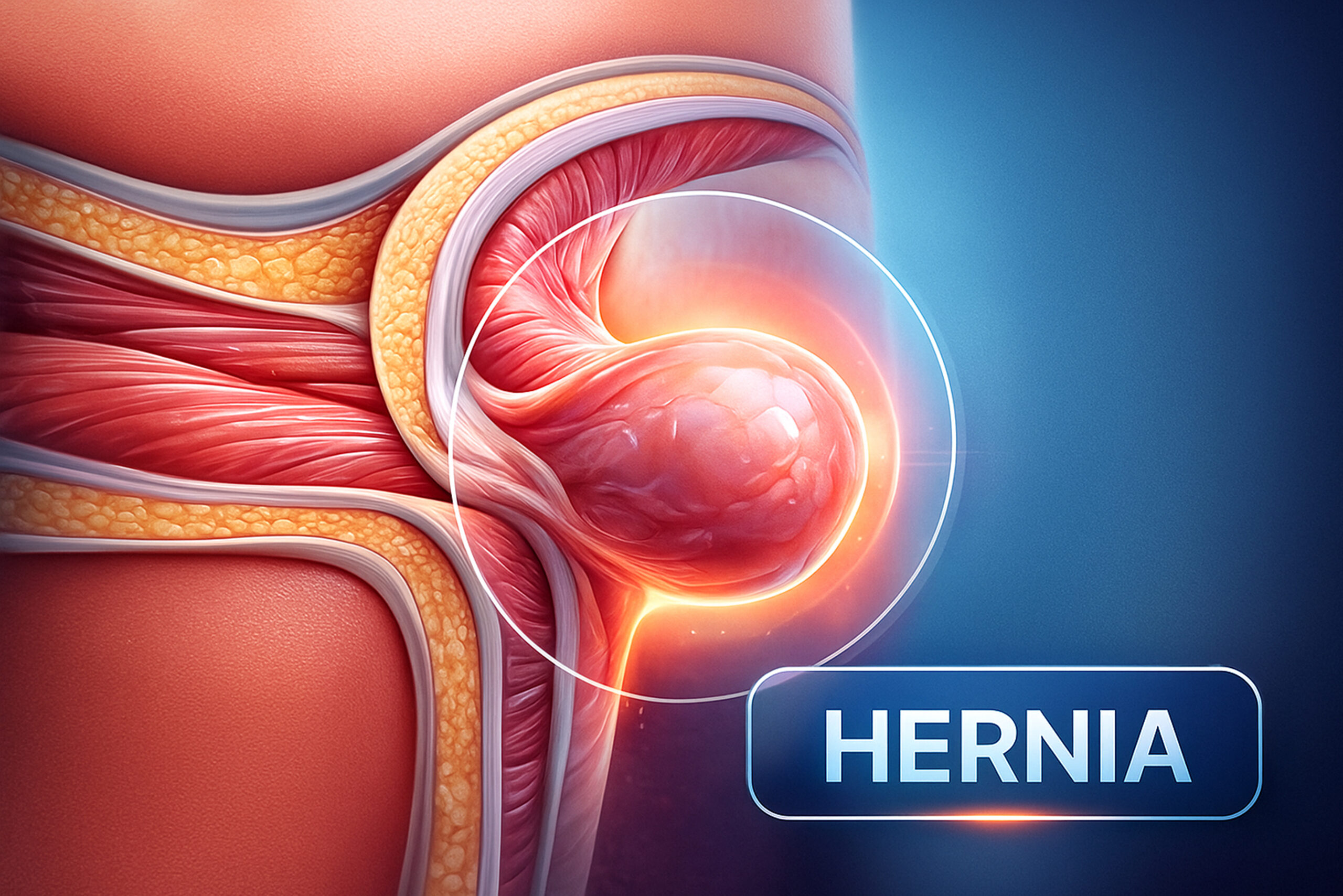
A hernia forms when an internal organ or tissue (usually intestine or fat) pushes through a weak spot in the muscle wall.
Most common hernia locations: ✔ Groin ✔ Belly button ✔ Upper abdomen ✔ Past surgical incisions ✔ Diaphragm (hiatal hernia)
Regardless of location, the principle is the same — a weakness in the muscle allows tissue to bulge out.
Types of Hernias
✔ Inguinal Hernia
Occurs in the groin; most common in men.
✔ Umbilical Hernia
Bulge around the belly button.
✔ Incisional Hernia
Develops at the site of previous surgery.
✔ Ventral Hernia
Forms in the midline of the abdomen.
✔ Hiatal Hernia
Stomach pushes through diaphragm → causes GERD.
Every type requires a customised treatment approach.
Causes of Hernia
Hernias result from increased internal pressure combined with muscle weakness.
Common causes include: ✔ Heavy lifting ✔ Chronic cough (smokers, asthma) ✔ Obesity ✔ Pregnancy ✔ Constipation & straining ✔ Previous abdominal surgery ✔ Age-related weakness ✔ Family history ✔ Rapid weight loss
Symptoms of a Hernia
Bulge that appears with standing or coughing ✔ Pain or discomfort in groin or abdomen ✔ Burning or pulling sensation ✔ Heaviness or pressure ✔ Pain during lifting ✔ Indigestion or acidity (hiatal hernia) ✔ Swelling in scrotum (in men)
If the pain becomes severe → dangerous complication.
Complications of Untreated Hernia
⚠ 1. Strangulated Hernia
Part of the intestine gets trapped → loses blood supply → emergency, life-threatening.
⚠ 2. Intestinal Obstruction
Vomiting, severe pain, inability to pass stools.
⚠ 3. Hernia Enlargement
The defect widens, making surgery more difficult.
⚠ 4. Chronic Pain
Delaying surgery only increases risks.
Why Early Surgery Is The Best Option
✔ Smaller hernia → easier repair ✔ Lower risk of strangulation ✔ Faster recovery ✔ Less postoperative pain ✔ Better cosmetic result ✔ Lower recurrence rates ✔ Avoid emergency surgery
Early repair ensures the safest outcome.
Treatment Options
There is no medicine, exercise, belt, or home remedy that can cure a hernia.
The ONLY definitive treatment is surgery.
1. Laparoscopic Hernia Repair (Keyhole Surgery)
✔ Small incisions ✔ Mesh placed from inside ✔ Less pain ✔ Quick recovery
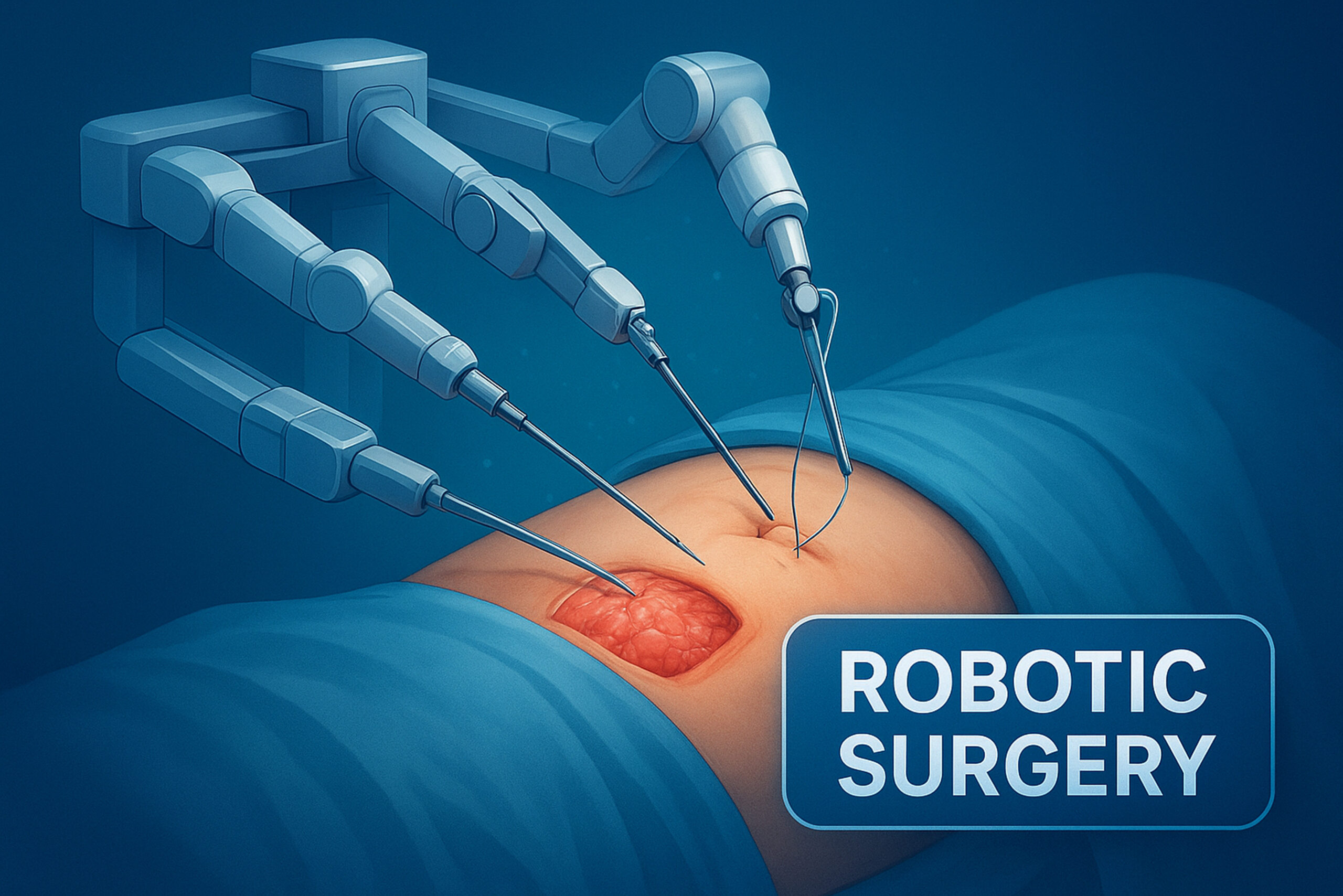
2. Robotic Hernia Repair (Most Advanced)
✔ Highest precision ✔ 3D HD view ✔ Perfect suturing ✔ Minimal pain ✔ Best for obese, bilateral & recurrent hernias ✔ Lower recurrence
⭐ Why Robotic Hernia Surgery Is Superior
✔ Tremor-free movements ✔ 360° wrist instruments ✔ Better mesh placement ✔ Less nerve irritation ✔ Excellent for complex cases ✔ Best for re-do hernias ✔ Faster healing
Robotic surgery provides the safest and most accurate repair.
Recovery After Hernia Surgery
✔ Walk within hours ✔ Liquid diet same day ✔ Discharged in 24 hours ✔ Resume office work in 5–7 days ✔ Full recovery in 2–3 weeks ✔ Avoid heavy lifting for 4–6 weeks
The BariOSS team offers complete postoperative guidance.
⭐ Why Choose BariOSS Clinic?
✔ Expert in laparoscopic & robotic hernia repairs ✔ Advanced mesh techniques ✔ High-precision robotic platform ✔ Minimal pain & fast discharge ✔ Specialised in inguinal, ventral, umbilical, incisional & hiatal hernias ✔ Trusted by patients across Tamil Nadu